Start with crop system and labor flow
Commercial hydroponic projects in the USA may grow leafy greens, herbs, strawberries, vine crops, seedlings, or mixed nursery crops. Each system changes the greenhouse layout. NFT channels, Dutch buckets, grow bags, or bench systems need different aisle width, drainage planning, hanging points, and irrigation routing. Buyers who only ask for a generic greenhouse size often get a weaker quote than buyers who explain the crop system clearly.
If you are still comparing structure families, review the greenhouse structures for U.S. farms guide first, then return to this page with your preferred project direction.
Multi-span film greenhouse kits often fit cost-sensitive hydroponic expansion
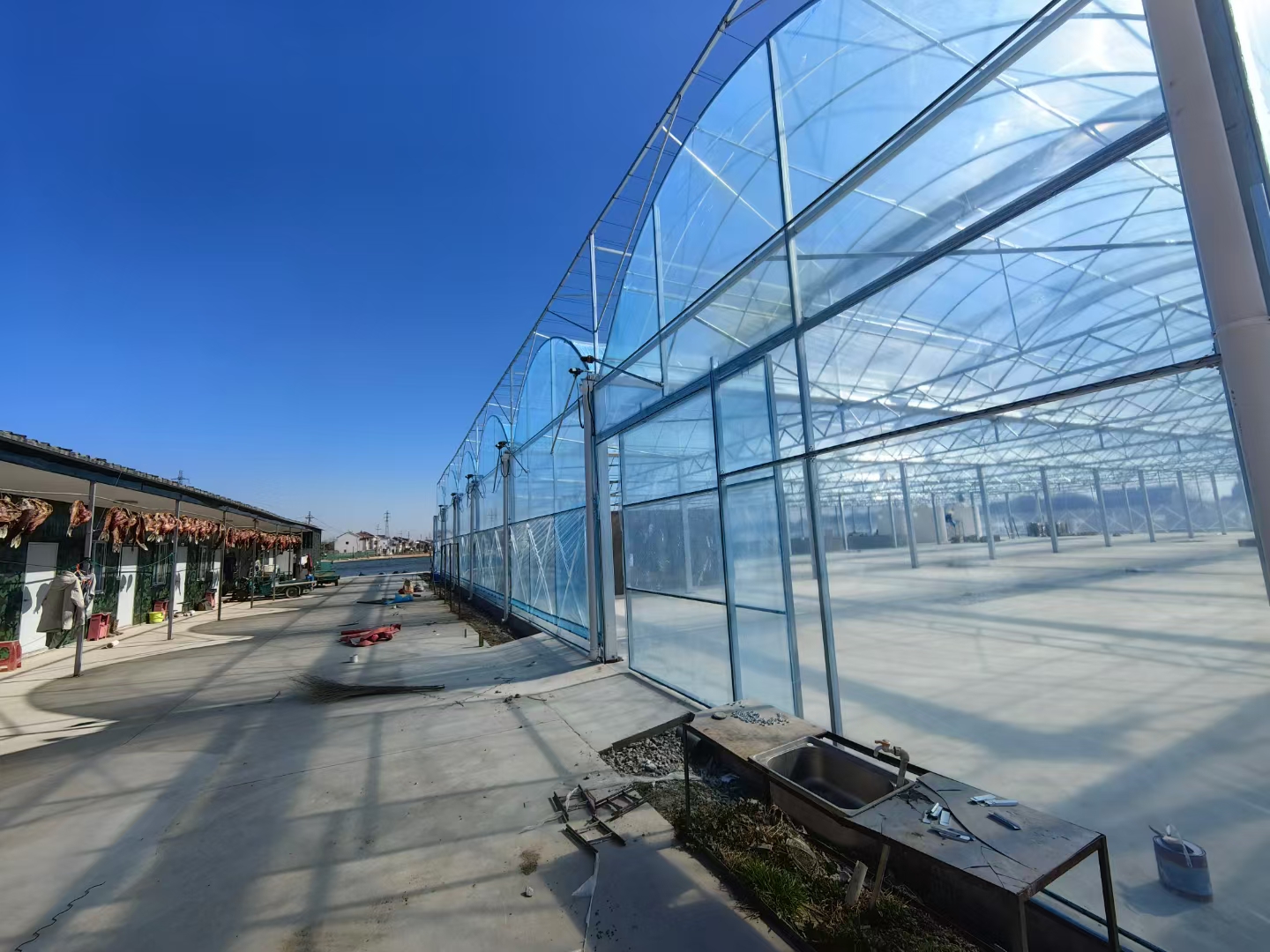
Many commercial growers start by comparing a multi-span film greenhouse because it can provide repeated bays, practical ventilation, lower capital cost, and easier scale-up across a larger footprint. For lettuce, herbs, propagation, or mixed vegetable programs, this structure can leave room for shade, insect netting, circulation fans, and future line expansion.
Buyers planning multiple connected bays should also compare the multi-span greenhouse supplier guide to check gutter details, bay spacing, packing scope, and drawing clarity before ordering.
Glass or polycarbonate structures can make sense for premium hydroponic projects
Some hydroponic growers want a cleaner, more permanent building with stronger long-term presentation and more controlled climate behavior. In those cases, the Venlo glass greenhouse or a polycarbonate greenhouse kit may be worth comparing. These options are often considered for high-value crops, research, propagation, or investor-facing projects where long service life and workflow clarity matter.
What should be in a serious hydroponic greenhouse quote
A hydroponic greenhouse quote should separate the core structure from the crop system and accessories. If the quote gives only one total price, buyers may not know whether the supplier included enough ventilation, mounting support, or working height for the planned irrigation and crop setup.
- Width, length, bay count, side height, and gutter height.
- Covering type: film, polycarbonate, or glass.
- Ventilation and cooling: roof vents, side vents, circulation fans, pad-and-fan, fogging, shade, or insect netting.
- Space assumptions for fertigation, water tanks, filtration, pumps, drainage, and service aisles.
- Packing list, labeled materials, drawings, destination port, and installation support scope.
Shipping and lead time still affect hydroponic launch timing
Hydroponic projects usually depend on synchronized delivery. The greenhouse shell, irrigation hardware, crop system, and local foundation work need to line up. Before locking a startup date, review the greenhouse lead time from China to USA guide and the greenhouse shipping guide. That reduces the risk of finished foundations waiting on materials or imported components arriving before the site is ready.
Use the equipment checklist before requesting the final package
Hydroponic growers often add optional systems quickly: insect netting, shade, cooling, circulation fans, trellis points, benches, service platforms, or irrigation support parts. Review the greenhouse equipment checklist before you request pricing so the quote can separate must-have structure items from later-phase upgrades.
Send a project brief that creates real buying intent
Caoyuhe can prepare export-oriented greenhouse recommendations for U.S. commercial growers planning hydroponic projects. Send your state, size, crop, target planting system, gutter height target, cooling needs, and destination port to get a faster quote conversation with fewer revisions.